Boeing 707 vs. Douglas DC-8: A Historic Rivalry
Explore the historic rivalry between the Boeing 707 and Douglas DC-8. Discover their innovations, impact on aviation, and how they shaped air travel history.
Table of Contents
In the annals of aviation history, few rivalries have been as consequential as the competition between the Boeing 707 and the Douglas DC-8. These two aircraft didn't just compete for market share. They fundamentally transformed how the world traveled, shrinking global distances and making international air travel accessible to millions for the first time.
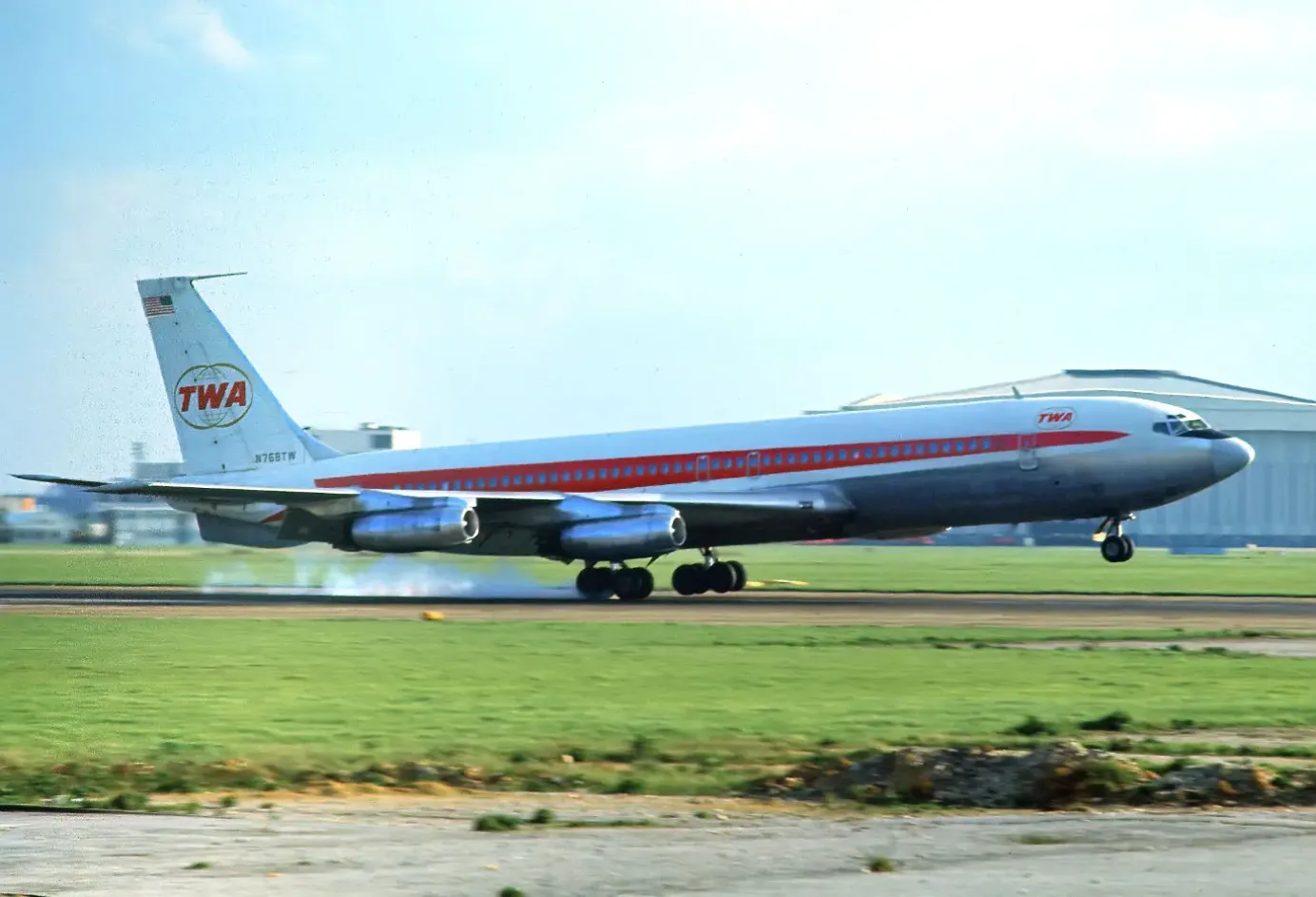
The Boeing 707, which entered service in 1958, and the Douglas DC-8, following closely in 1959, represented a quantum leap from the propeller-driven aircraft that had dominated the skies since aviation's earliest days. Both aircraft were long-range, narrow-body jetliners powered by four turbofan engines, and both promised unprecedented speed, comfort, and efficiency. Yet despite their superficial similarities, these two aircraft embodied distinctly different design philosophies and corporate strategies.
Boeing's 707 emerged from the company's bold gamble on the Model 367-80 (the famous "Dash 80" prototype), which first flew in 1954. Boeing had invested $16 million of its own money—a staggering sum at the time—without a single order in hand. Douglas Aircraft, by contrast, watched Boeing's early moves carefully before committing to the DC-8, believing they could learn from Boeing's experience and build a superior aircraft.
Dawn of the Jet Age
The 1950s represented a pivotal moment in aviation history. World War II had accelerated jet engine technology dramatically, and by the early postwar years, military jets were proving their worth in conflicts like the Korean War. Yet commercial aviation remained stubbornly wedded to piston engines, with aircraft like the Douglas DC-7 and the Lockheed Constellation representing the pinnacle of propeller-driven transport.
The catalyst for change came from an unexpected source: the British. In 1952, the de Havilland Comet became the world's first commercial jetliner to enter service with BOAC (British Overseas Airways Corporation). Flying at 490 mph—nearly 200 mph faster than its piston-engine competitors—the Comet offered passengers a glimpse of the future. The aircraft cruised above most weather, providing a smoother ride, and could cross the Atlantic with just one refueling stop.

However, the Comet's promise turned to tragedy. A series of catastrophic in-flight breakups in 1954 grounded the fleet and revealed fatal flaws in its pressurized fuselage design. While this disaster set back British aviation for years, it provided American manufacturers with invaluable lessons about metal fatigue and the challenges of pressurized jet flight.
Boeing executives, including the legendary Bill Allen, recognized that the U.S. Air Force's need for a jet tanker-transport presented the perfect opportunity to develop commercial jet technology. The company's military contracts had kept them financially stable, and the tanker program would allow them to refine jet transport design at government expense. When the Dash 80 prototype took to the skies in July 1954, painted in Boeing's distinctive brown and yellow livery, it was a declaration of intent.
Airlines were initially skeptical. Jets consumed fuel voraciously, required longer runways, and demanded entirely new maintenance procedures and pilot training. The operating costs seemed prohibitive. But Boeing's persistent demonstrations—including test pilot Tex Johnston's infamous barrel roll over Lake Washington during the 1955 Gold Cup hydroplane races—gradually convinced carriers that jets represented the future.
Douglas Aircraft found itself in a difficult position. As the dominant supplier of commercial aircraft with its successful DC-6 and DC-7 series, the company had the most to lose from a premature transition to jets. CEO Donald Douglas initially believed the market wasn't ready. But as Pan American Airways, American Airlines, and other major carriers began placing orders for the 707, Douglas realized they had no choice but to respond. In June 1955, Douglas officially launched the DC-8 program, banking on their reputation for reliability and their close relationships with airline customers to overcome Boeing's head start.
The race was on, and the jet age had truly begun.
Design and Technical Specifications
While both the Boeing 707 and Douglas DC-8 shared the fundamental configuration of swept-wing, four-engine jetliners, their engineering details revealed significantly different approaches to similar problems.
Dimensions and Capacity
The Douglas DC-8 was notably larger than the initial 707 variants. The DC-8 measured 150 feet 6 inches in length compared to the 707-120's 144 feet 6 inches. This gave Douglas an immediate advantage in passenger capacity—the DC-8 could typically accommodate 176 passengers in a mixed-class configuration, while early 707s carried around 140-180 passengers depending on the variant.
However, Boeing's fuselage was slightly wider at 148 inches internally versus the DC-8's 147 inches. This seemingly minor one-inch difference became significant: Boeing could fit six-abreast seating (3-3 configuration) more comfortably, while the DC-8's cabin felt marginally more cramped on long flights. Airlines and passengers noticed, even if they couldn't articulate exactly why.

Wing Design Philosophy
The wings represented perhaps the most fundamental difference between the two aircraft:
Boeing 707: Featured a 35-degree sweep and was designed with lessons learned from the B-47 and B-52 bomber programs. The 707's wing emphasized high-speed performance and was relatively thin, with a thickness-to-chord ratio of 10%. Boeing incorporated distinctive "strakes" on the inboard leading edge to improve low-speed handling.
Douglas DC-8: Employed a more conservative 30-degree sweep with a thicker wing (11% thickness-to-chord ratio). Douglas engineers believed this design would provide better low-speed characteristics, crucial for the shorter runways many airports still operated. The DC-8's wing also featured more sophisticated high-lift devices, including leading-edge slats across the entire span.
Engine Options and Performance
Both aircraft initially relied on the Pratt & Whitney J57/JT3C turbojet, producing around 13,500 pounds of thrust. However, their performance characteristics differed:
| Specification | Boeing 707-120 | Douglas DC-8-10 |
|---|---|---|
| Maximum Speed | 540 mph (Mach 0.82) | 560 mph (Mach 0.85) |
| Cruising Speed | 490 mph | 505 mph |
| Maximum Range | 3,000 nautical miles | 3,300 nautical miles |
| Service Ceiling | 42,000 feet | 42,000 feet |
| Takeoff Distance | 10,840 feet | 10,500 feet |
The DC-8 was faster. In fact, it became the first commercial jetliner to break the sound barrier (in a controlled dive) during testing in 1961, reaching Mach 1.012. This speed advantage, while modest in normal operations, appealed to airlines focused on schedule reliability and quick turnaround times.

Range Evolution
Both manufacturers quickly realized that range was paramount for long-haul operators. Boeing responded with the 707-320 Intercontinental, featuring a longer fuselage, increased wingspan, and more powerful JT4A turbojets. Douglas countered with the DC-8-30 series and eventually the DC-8-50, incorporating increasingly powerful engines and additional fuel capacity.
The most significant leap came with turbofan engines. The 707-320B, equipped with Pratt & Whitney JT3D turbofans, offered dramatically improved fuel efficiency—approximately 25% better than the turbojet versions. Douglas followed suit with the DC-8-60 series, which featured not only turbofans but also radical fuselage stretches that created the world's longest commercial jet at the time (187 feet), capable of carrying up to 259 passengers.
Systems and Innovation
Douglas DC-8 innovations included:
- More advanced flight control systems with sophisticated spoilers for roll control
- Lower cabin pressurization (5,000 feet cabin altitude vs. 8,000 feet on early 707s)
- Thrust reversers on all four engines from the outset
- More accessible maintenance panels and systems
Boeing 707 advantages included:
- Experience from military programs translated into robust, proven systems
- Better high-altitude performance due to wing design
- Earlier availability of passenger amenities based on customer feedback
- More flexible cargo door options for freighter conversions
Both aircraft featured similar avionics suites for their era, including weather radar, radio navigation systems, and autopilots capable of handling much of the cruise portion of flight—though both still required three-person flight crews (pilot, co-pilot, and flight engineer).
Operational History
The operational stories of the 707 and DC-8 reveal how theoretical specifications translated into real-world success—and how factors beyond pure engineering determined commercial viability.
Early Service and Growing Pains
Pan American Airways made history on October 26, 1958, launching the first scheduled U.S. commercial jet service with a Boeing 707-120 flying from New York to Paris. The flight took just 8 hours and 41 minutes—nearly three hours faster than the fastest piston-engine competitors. Passengers were stunned by the smooth, quiet ride at 35,000 feet, far above turbulent weather. The jet age had truly arrived.
The Douglas DC-8 entered service with Delta Air Lines and United Airlines on September 18, 1959, nearly a year behind Boeing. This head start proved crucial. By the time the first DC-8 carried paying passengers, Boeing had already delivered dozens of 707s and had refined many operational procedures through hard-won experience.
Early operations weren't without challenges for either aircraft:
- Noise pollution became an immediate issue. Communities near airports complained bitterly about the screaming turbojets, leading to night-time curfews and operational restrictions that hadn't existed for quieter piston-engine aircraft.
- Fuel consumption shocked airline accountants. Jets burned fuel at prodigious rates, though their superior speed and capacity eventually proved the economics viable.
- Runway requirements forced many airports to extend runways and strengthen pavement, investments that favored larger hub airports over regional facilities.
- The "Saarinen stall" (named after the architect) affected early 707s: at certain power settings during approach, the wing's lift distribution could cause uncommanded rolling motions. Boeing issued modifications, but not before several tense moments and at least one incident.

Military and Government Service
Both aircraft found extensive military applications, which provided crucial additional revenue:
Boeing 707 derivatives:
- C-135 Stratolifter: Military transport based on the Dash 80 design
- KC-135 Stratotanker: Aerial refueling tanker (still in service today)
- E-3 Sentry (AWACS): Airborne early warning and control system
- VC-137: Presidential transport aircraft (Air Force One)
- Numerous special mission variants for reconnaissance, communications, and testing
Douglas DC-8 military use:
- Limited military adoption compared to the 707
- Some DC-8s served as government transports and testbeds
- NASA operated DC-8s for research missions, including atmospheric studies
The military's preference for Boeing designs provided a steady revenue stream that helped Boeing weather economic downturns and invest in continuous improvement.
Notable Operations and Records
Pan Am became the poster child for 707 operations, eventually operating over 140 of the type. Their distinctive blue globe livery on 707s became synonymous with international travel and American prestige during the Cold War era.
United Airlines became the largest DC-8 operator, with more than 80 aircraft at the fleet's peak. United's confidence in Douglas reflected the carrier's historically close relationship with the manufacturer and their satisfaction with the DC-8's operational flexibility.
Qantas flew 707s on the demanding "Southern Cross" route from Australia to the United States, initially requiring a refueling stop in Fiji or Hawaii. The airline's 707-338C variant (a customized version) served reliably in this challenging environment.
The DC-8's "Super 60" series (1965-1972) represented Douglas's boldest gambit—stretching the fuselage dramatically to create higher-capacity variants. The DC-8-61 could carry 269 passengers, making it the highest-capacity single-aisle jet until the Boeing 757-300 decades later. These stretched variants found favor with charter operators and high-density routes.
Incidents and Safety Record
Both aircraft proved fundamentally safe designs, though each experienced tragic accidents during their operational lives. Most often these were due to pilot error, weather, or maintenance issues rather than inherent design flaws.
The most significant design-related issue affected both types: early turbojet engines were prone to compressor stalls and required careful handling. The introduction of turbofan engines largely resolved these concerns while simultaneously improving efficiency and reducing noise.
By the time both aircraft ended their passenger service careers in the early-to-mid 2000s (with a few cargo operators continuing beyond), they had collectively accumulated millions of flight hours and carried hundreds of millions of passengers safely across billions of miles.
Comparative Analysis
When aviation historians and engineers compare the Boeing 707 and Douglas DC-8, the verdict isn't simply a matter of which aircraft was "better"—rather, it's a nuanced assessment of how each excelled in different areas and served different market needs.


Performance Metrics
Speed and Efficiency:
The DC-8 held a clear speed advantage throughout most of its production run. Douglas's engineers designed for speed from the outset, and the aircraft routinely cruised 15-20 mph faster than comparable 707 variants. For airlines operating transcontinental or transoceanic routes, this translated to slightly shorter block times and potentially one additional round-trip per week on some routes.
However, Boeing's focus on fuel efficiency—particularly after introducing the 707-320B with turbofan engines in 1962—gave it an economic edge. The turbofan-equipped 707 consumed approximately 15-20% less fuel per seat-mile than the contemporary DC-8-50 series with turbojets. When Douglas finally introduced turbofans on the DC-8-61/62/63 series, they matched or slightly exceeded Boeing's efficiency, but by then Boeing had already captured the majority of the market.
Range and Payload:
Douglas initially marketed the DC-8's superior range as a key differentiator. The DC-8-30 and DC-8-50 intercontinental variants could carry full passenger loads slightly farther than equivalent 707-320 models. This mattered enormously for airlines like SAS (Scandinavian Airlines) and KLM Royal Dutch Airlines, which needed to fly long, thin routes from Europe to secondary U.S. cities or to emerging Asian markets.
Boeing countered by offering more variants optimized for specific missions:
- 707-320B: The "sweet spot" for most long-haul operators
- 707-320C: Convertible passenger/cargo variant with a strengthened floor and large cargo door
- Shorter-range variants for domestic operations at lower acquisition costs
Economic Comparison
The true measure of commercial aircraft success lies in economics, and here the comparison becomes fascinating:
- Initial 707-120: approximately $5.5 million (1958 dollars)
- Initial DC-8-10: approximately $5.2 million (1959 dollars)
Douglas initially priced the DC-8 slightly below the 707 to compensate for Boeing's head start. However, as production ramped up, Boeing's higher volume allowed them to achieve better economies of scale.
Operating Costs:
Various airline studies from the 1960s showed remarkably similar operating costs per seat-mile for comparable variants:
- Both aircraft required three-man crews
- Fuel consumption was nearly identical for same-generation engines
- Maintenance costs tracked within 5-10% of each other
Market Popularity
The commercial battle between the 707 and DC-8 ultimately came down to sales numbers, market share, and lasting influence on the industry. Here, Boeing's victory was decisive—though Douglas put up a remarkable fight.
When production of both aircraft finally ended, the scoreboard told a clear story:
Boeing 707: 1,010 aircraft produced (1957-1979)
- Commercial passenger/cargo: 725 aircraft
- Military variants (including KC-135): 285+ aircraft
- Peak production rate: approximately 15 aircraft per month (1967)
Douglas DC-8: 556 aircraft produced (1958-1972)
- All commercial variants
- Peak production rate: approximately 8 aircraft per month (1966)
Boeing outsold Douglas by nearly 2:1 in commercial versions and enjoyed a production run seven years longer. Even more significantly, Boeing's military derivatives provided steady production and revenue when commercial orders slowed.

Legacy and Impact
The Boeing 707 and Douglas DC-8 fundamentally transformed commercial aviation, leaving technical legacies that influence aircraft design to this day.
These aircraft democratized the skies in ways that permanently changed global society. Transatlantic crossings that once consumed 18-20 hours suddenly took just 7-8 hours nonstop. More importantly, cost per seat-mile fell by approximately 30-40% compared to piston-engine aircraft, eventually translating into lower fares that made international travel accessible to millions for the first time. The global tourism boom of the 1960s and 1970s owes its existence directly to these two aircraft.
The innovations pioneered on these aircraft became foundational to modern aviation. Advanced fail-safe design principles, wing-mounted engine pylons, weather radar integration, and hydraulic redundancy all trace their lineage to these pioneering jets. Air traffic control procedures had to be completely reimagined for high-altitude jet operations, while the first comprehensive aircraft noise regulations emerged in 1969, directly prompted by their screaming turbojets.
The 707's success funded Boeing's entire subsequent product line—the 727, 737, and 747 all benefited from the 707's profitability and lessons learned. Both aircraft established design standards that influenced competitors worldwide.
Boeing's victory established them as the dominant commercial aircraft manufacturer—a position maintained ever since. Douglas's second-place finish created financial pressures that contributed to the 1967 McDonnell merger and ultimately Boeing's 1997 acquisition of McDonnell Douglas. Perhaps most significantly, the enormous development costs created barriers to entry that established today's limited-competition market structure.
The military KC-135 Stratotanker, based on the 707 design, remains in active U.S. Air Force service with approximately 400 aircraft still flying—over 60 years of continuous operation. In an ironic twist, the DC-8 achieved a final victory: after CFM56 re-engining in the 1980s, DC-8s flew cargo services until 2009, outlasting the 707 in scheduled commercial service.

Conclusion
The rivalry between the Boeing 707 and Douglas DC-8 was a defining moment in aviation history that determined the trajectory of commercial flight for decades to come.
Boeing won the market battle decisively, outselling Douglas nearly two-to-one and establishing dominance that persists through today's 737, 777, and 787 programs. The 707's head start and early capture of crucial customers like Pan American proved insurmountable advantages.
Yet Douglas achieved something equally important: they proved that entering the market second could still produce a technically superior aircraft. The DC-8 was faster, offered better range in early variants, and its Super 60 series represented perhaps the boldest gambit of the jet age—stretching an existing design to extremes that wouldn't be matched for decades.
From a passenger perspective, the differences were subtle. Both delivered on the promise of the jet age: speed, comfort, and reliability that made international travel practical for millions. From a pilot's perspective, opinions remain divided even today among those who flew both types.
The historical verdict is nuanced. Boeing's 707 was the right aircraft at the right time with the right strategy. Douglas's DC-8 was an engineering triumph that arrived just late enough to claim second place—a painful position in a market that increasingly rewarded first-movers.
Perhaps the most important conclusion is this: we needed both aircraft. The competition pushed both companies to excel, drove innovation faster than a monopoly would have permitted, and gave airlines choices that benefited everyone. Today's commercial aviation landscape owes its existence to this battle.
As the last examples retire to museums, they leave behind an extraordinary legacy: they proved jets could be commercially viable, they shrank the world, and they launched the democratization of air travel that we take for granted today.
Also read:

Planenerd Newsletter
Join the newsletter to receive the latest updates in your inbox.